

Fluffy, buttery, and loaded with garlicky goodness — these soft garlic twists are perfect as a
side, snack, or even for sandwiches. The dough is rich yet light, and the garlic filling melts beautifully into every layer.
For other bread recipes, check out the easy to make, no-knead bread.
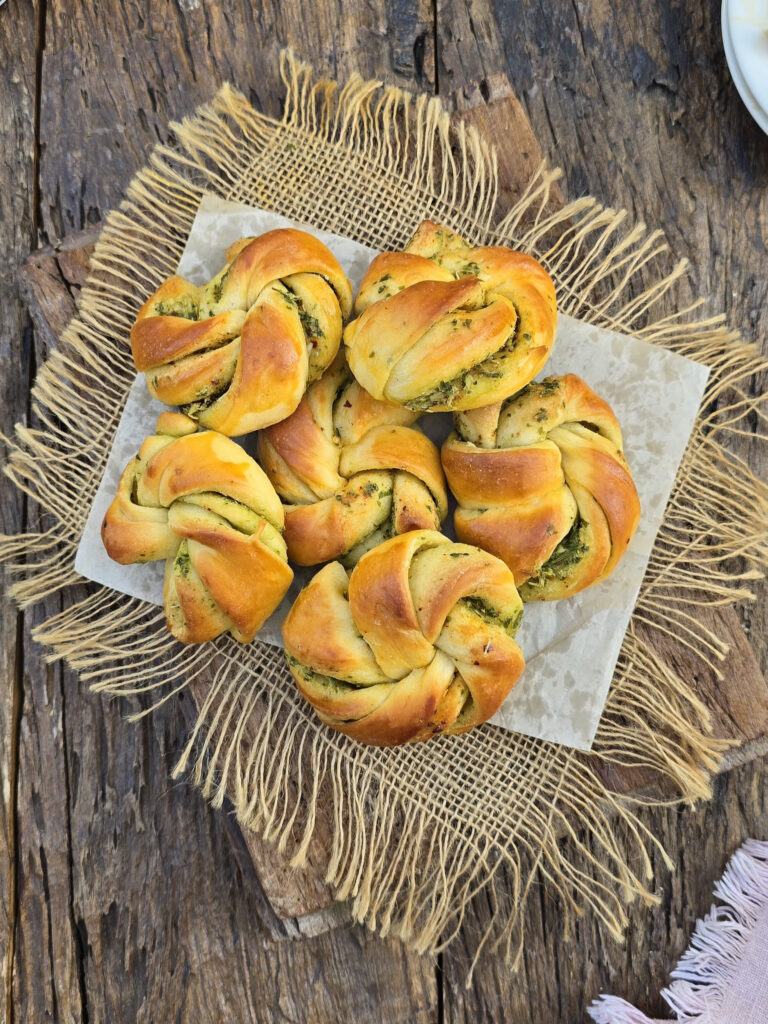

Soft Garlic Twists (Garlic Knots)
Ingredients
For the Dough
For the Garlic Filling
For Egg Wash (Choose based on desired colour)
Instructions
-
Prepare the Dough - Start by measuring 380 grams
flour (keep the remaining flour aside for adjustments).In a mixing bowl, add flour, sugar, yeast, and salt. Mix well. In a separate bowl, warm the milk slightly (just warm to touch, not hot) Add butter (it will soften in the hot milk). Add eggs and whisk. Make sure the liquid is only lukewarm, if it is too hot will kill the yeast. -
Kneading Process - Add the liquid mixture to the flour. Knead using a stand mixer (medium speed) or by hand. Mix until a rough dough forms.
-
Cover and rest for 10 minutes (autolyse stage helps gluten develop).
-
After resting, knead again (medium tohigh speed) for 4-6 minutes. Scrape the bowl every 1-2 minutes. minutes. If the dough feels too sticky, add reserved flour 1 tablespoon at a time. The dough should be soft, slightly sticky, and elastic.
-
Windowpane Test - Cut (don't tear) a small piece of dough. Stretch gently. If it becomes thin and translucent, dough is ready. If it tears - knead a bit more
-
First Proof - Shape dough into a smooth ball. Place in a light bowl. Cover and let rise for about 1 hour. Dough should double in size.
-
Shaping the Dough - Lightly flour your work surface or use a silicone mat. Gently transfer the proofed dough (no need to punch it down). Roll into a 30cm x40 cm rectangle. As you roll, the trapped air will naturally deflate—no need to force it.
-
Spread the Filling - Take out the garlic filling and keep at room temp while rolling the dough to soften. Spread evenly over the rolled dough.
-
Envelope Fold - Visually divide the dough into 3 parts. Fold the left side. Then fold the right side over it (like a letter) Gently lift the folded dough, dust lightly with flour. Roll gently. Cut into 2 cm wide strips using a sharp cutter. Take each strip, stretch lightly, twist and curl. Tuck the edge under.
-
Second Proof - Transfer to a baking tray lined with double baking
paper. Cover loosely. Let it rise for 20—30 minutes. Meanwhile,
preheat oven to 180°C. Place a spill tray (empty tray) inside the oven. Your baking tray will sit on top of this to control direct heat. -
Egg Wash & Baking - Brush gently with your prepared egg wash. Bake at 180°C for 18-25 minutes (Average: ~22 minutes, depending on your oven). Bake until beautifully golden brown on top.
-
Finishing Touch - Immediately brush with salted butter. Optional: sprinkle fresh chopped coriander leaves
-
Cooling -Transfer to a wire rack. Allow to cool briefly.
Note
First Proof
How to Check Perfect Fermentation. Once the dough has rested for about 50-60 minutes, it should have doubled in size. But instead of relying only on time, always check the dough. Finger Dent Test - Gently press the center of the dough. If the dent holds its shape - perfectly proofed. If the dent slowly springs back - needs more time. If the dough collapses
completely - over-proofed. Over-proofed dough can result in dry, dense bread, so keep an
eye on it rather than the clock.
How to Check Second Proof
Use the same gentle finger test: This time, gently touch the dough. If it leaves a dent that slowly fills back - ready to bake. Springs back quickly - needs more time. Dent stays deep without movement - over-proofed.
Final Tips
Avoid over-proofing—it's the most common mistake. Gentle handling = softer
bread. Double tray method prevents over-browning at the base.
Flour Handling & Kneading Tips (Machine + Hand Method)
Getting the dough consistency right is the most important
step for soft, fluffy garlic twists.
Flour Adjustment Tips
Always start with the lower quantity of flour. Knead for about 5 minutes before deciding to add more flour. If the dough feels too sticky, add flour 1 tablespoon at a time. Knead well before adding more.
Important: Adding too much flour will make the dough dry and dense, resulting in dry bread. The ideal dough should be soft, smooth, slightly sticky to touch. It is always better to keep the dough slightly sticky rather than dry.
Kneading in a Machine
Use a dough hook. Start on medium speed until a rough dough forms. After resting (autolyse), knead on medium to high speed. Scrape the bowl in between for even kneading. Continue until the dough becomes smooth and elastic and passes the windowpane test.
Kneading by Hand (Stretch, Fold & Turn Method)
If kneading without a machine, push the dough forward using the heel of your palm. Fold it back over itself, turn the dough slightly. Repeat.
Important- Stretch, don't tear the dough. Maintain a steady rhythm. This method takes a little longer and may feel tedious at first. But once you get comfortable, it becomes very natural and effective.
